
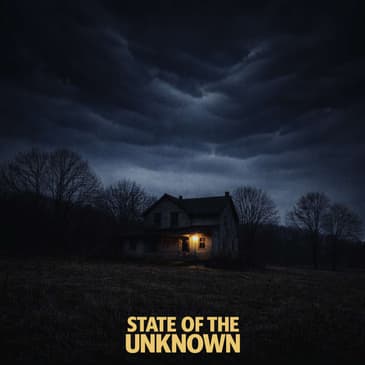

Located in Hinsdale, New York, the Hinsdale House has become one of the state’s most frequently discussed haunted locations. Reports of unusual activity date back decades, but this episode focuses on a specific period when one family lived inside the home and documented what they experienced.
According to their accounts, the activity followed a progression. Unexplained sounds. Physical sensations. Sudden illness. Objects reportedly moving. The family stated that the disturbances intensified over time and were witnessed by visitors and investigators.
In this episode, host Robert Barber examines the claims associated with the Hinsdale House during that documented period, including what was reported, what investigators later recorded, and how the events were interpreted by those involved.
Rather than relying on folklore, the focus remains on the timeline of reported activity in Hinsdale, New York, what evidence was said to exist, and where the limits of verification begin.
Is the Hinsdale House an example of environmental stress misinterpreted as paranormal activity, or does this case represent a documented haunting that continues to defy simple explanation?
This episode explores what was claimed, what can be supported, and why this rural New York case remains part of modern American haunting history.
🔍 Further Reading & Case Research
(For listeners who want to explore how this case has been documented)
- Echoes of a Haunting - Revised - Author Clara M. Miller
- Hinsdale House An American Haunting — various authors
As an Amazon Associate, I earn from qualifying purchases.
🌙 Listening Environment & Atmosphere
(Optional items some listeners use to create a calm or focused listening space)
These are optional links.
Support State of the Unknown
If you enjoy the show and would like to help support it, you can become a Sasquatch Supporter for $3 a month. Your support helps cover the costs of researching and producing the show, website hosting, distribution, and helping more people discover State of the Unknown.
Membership is completely optional, and the show remains free for everyone.
Become a Sasquatch Supporter on Patreon
🔍 New episodes every Tuesday
🌐 Visit stateoftheunknown.com for show notes and to submit your own story.
📬 Questions, theories, or story ideas? Reach out at contact@stateoftheunknown.com or @stateoftheunknownpodcast.
Some stories don’t stay buried.
We go looking anyway.
When you move into a house, you don't expect to inherit anything from the people who lived there before you. You assume whatever they experienced ended when they left. At first, this house feels no different. You unpack, you settle in, you move through the rooms without thinking twice about it. But there are moments when you pause just long enough to wonder if something changed while you weren't paying attention. Other people paused here too. They heard things they couldn't explain, and they told themselves the same stories to stay comfortable. You just haven't reached that part yet. What you've stepped into isn't the beginning of something, it's the continuation of it. You're just the next person to live with it. The house sits just outside the village of Hinsdale in rural western New York. It's a quiet area, surrounded by woods, the kind of place where nights get dark early and sound carries farther than you'd expect. The story begins in the early 1970s when the Dandy family moved into the house. They weren't looking for anything unusual. They weren't investigators. They were just trying to settle into a house that seemed, at least at first, like any other. What they experienced there shaped what came next. I'm your host, Robert Barber. And tonight, we're looking at a quiet house in rural western New York where multiple families over several decades reported the same disturbances inside the same walls. Footsteps, movement, the feeling that something was already there. This is the story of the Hinsdale House. Let's get into it. When the Dandy family moved into the house outside Hinsdale in the early 1970s, nothing felt strange at first. It was quiet, but that wasn't unusual for the area. They were surrounded by woods, far enough from town that nights were naturally still. That actually felt like a benefit. They unpacked, got settled, and started living there the way anyone would. For a while, the house didn't give them much reason to think about it at all. That slowly changed. For the first few weeks, nothing rose above the level of inconvenience. There were moments that didn't quite line up, but they passed quickly and left no impression behind. By morning, they were already forgotten. Sometimes it was a sound upstairs when no one was there. But what made it harder to ignore was that it kept happening. Not constantly and not on any kind of schedule, but often enough that it started to feel familiar. Someone would pause and listen. Someone would ask if anyone else heard that. And more than once, the answer was yes. At night, the house felt different. It wasn't dramatic, it just didn't feel settled. Some rooms felt noticeably colder than others, even when the heat was on. There was no obvious reason for it, but people avoided those areas without ever really discussing it. Sleeping became more difficult too. People woke up during the night without knowing exactly what had pulled them out of sleep. Sometimes there was a sound, other times there wasn't. There was just the feeling that something in the house was active when it should have been still. During the day, those impressions were easier to brush aside. Sunlight changed how everything felt. Whatever had seemed wrong the night before didn't carry the same weight once morning came. But every night it returned. The family didn't sit down and have a serious conversation about it right away. No one wanted to be the first person to say something might actually be wrong. Once you say it out loud, you can't really take it back. So instead, they adjusted. Lights stayed on longer than they used to. People were more aware where everyone else was in the house. Certain rooms were avoided late at night, not because anyone said they were afraid, but because it felt easier that way. It still didn't feel like fear. It felt like learning the habits of a place you didn't fully understand yet. But the house didn't calm down. And over time, those moments stopped feeling isolated. As time went on, the activity inside the house stopped blending into the background and became harder to ignore. Things didn't just happen when no one was around. They happened when people were present, sometimes immediately after someone entered a room or spoke out loud. That shift made it harder to dismiss what was going on as a coincidence. Doors became a problem. More than once, a door that had been closed was found open, or a door that had been left open was shut. At first it felt like forgetfulness. Someone must have misremembered. But after it happened again and again, that explanation stopped holding up. The sounds changed too. The footsteps they had heard early on became heavier and more deliberate. Instead of quick movement or random creaks, it began to sound like someone walking through the house with intention. The sound moved from one area to another, as if someone were crossing rooms rather than just passing through them. People started checking on each other more often. If someone heard something upstairs, they would ask if anyone else was there. When the answer was no, the house felt suddenly larger and much quieter than it should have been. Some rooms became uncomfortable to spend time in, even during the day. No one argued about it, they simply stopped using those spaces unless they had to. When they did go in, they didn't stay long. There were moments when the house felt cold in a way that didn't match the weather or the heating. The chill wasn't constant. It appeared in one area, lingered briefly, and then faded. By this point, whatever was happening no longer felt random. It felt tied to the house being occupied. By the time the family reached that point, the house was affecting more than just how they moved through it. Sleep was the biggest problem. By then, they'd been in the house for months. People weren't resting the way they used to. Nights were interrupted, sometimes by sounds, sometimes by the feeling that something was happening even when there was no clear noise to point to. Being tired made everything harder to deal with, and small things started to feel overwhelming. There were nights when the house didn't seem to settle at all. Instead of isolated sounds, things began happening in sequence. A noise upstairs would pull someone out of sleep. And while they were still lying there trying to decide whether it was worth getting up, something else would happen somewhere else in the house. A sound from another room, a door shifting, footsteps that didn't stop the way they used to. People stopped assuming the noises would fade if they waited long enough. What made it worse was how deliberate it began to feel. The sounds didn't crash or rush. They moved slowly across the ceiling, then down the hallway. It sounded less like a house settling and more like something navigating through it. Sleep stopped being restorative. People would wake up already tense, feeling like they'd been listening all night instead of resting. Being exhausted made everything feel sharper. Small noises caused bigger reactions. Normal stressors turned into arguments. Everyone felt worn thin. There were moments when someone would lie awake and realize they were afraid to fall asleep. Not because they expected something dramatic to happen, but because they didn't trust the house to stay quiet once they did. The nights blurred together. What had started as occasional disturbances became something they anticipated. People listened for it as soon as the house grew quiet. And when it started, there was a sense of resignation that settled in along with the sound. Not panic, just the knowledge that it was going to be another long night. That's when the house stopped feeling like a place they lived. It felt like something that was already there. Once that feeling set in, it started to affect how they behaved at night. Lights were turned on before people moved through the house, even for short walks down the hallway. Doors were opened carefully. Rooms were checked before anyone stepped inside them. It wasn't that they expected to see something standing there, it was that they didn't want to be surprised if something was. At least once the couple tried sleeping in a different room, hoping the activity might be tied to a specific area of the house. It didn't help. The sounds followed, the same slow movement, the same sense that the house was active no matter where they were. The idea that there might be a safe part of the house started to fade. By that point, the exhaustion wasn't just physical, it was mental. The couple felt worn down from constantly monitoring their surroundings, from never being able to fully relax inside a place that was supposed to offer privacy and rest. That was when the thought of leaving stopped feeling like overreaction. It started to feel like the only way to regain a sense of normalcy. By the time they decided to leave, they had been living in the house just over a year. When the family finally made that decision, it wasn't sudden. It was the result of everything that had been building over time. They packed up and moved out. And when they left the house, they didn't just leave behind a place they'd lived. They left behind something they didn't want to carry with them anymore. After the Dandy family left, the house didn't sit empty forever. Other people lived there. Visitors spent time inside. Later on, investigators would walk through the same rooms, sometimes staying overnight. And across those different periods, the experiences followed a familiar pattern. People noticed movement when no one else was present. They heard footsteps that didn't match where anyone was standing. Doors behaved in ways that didn't make sense in a quiet house. Sounds carried from one part of the home to another, even when there was no clear source. Some visitors described the feeling of being watched as they moved through certain areas of the house. Not constantly and not everywhere, but enough that it changed how long they stayed in those spaces. People didn't linger. They finished what they were doing and moved on. At night, the house felt heavier. The same sense of restlessness that the Dandy family had described seemed to return for others. Sleep was difficult. The quiet didn't feel peaceful. It felt expectant, like something was waiting for attention. Some people left early. Others tried to stay longer, telling themselves they could handle it or that things would calm down if they didn't react. They didn't. The house developed a reputation that didn't fade with time. Even as ownership changed in years past, stories about the place continued to surface. People who spent time inside often came away with the sense that the house wasn't just old or isolated or unsettling by coincidence. It felt active. Whatever had driven the Dandy family away didn't leave with them. It stayed behind. Up to this point, everything you've heard comes from the people who lived in the house, spent time inside it, or later walked through those rooms themselves. This is the story as it's been told by the people who experienced it. Now, it's worth slowing down and looking at what we actually know, what can be verified, and where things become less clear. There's no single origin story tied to this house. There's no widely shared account of a person, event, or incident that clearly marks the beginning of the activity. There are, however, a few things about the Hinsdale House that are solid. The house exists, it's real, and it's located just outside the village of Hinsdale in Kettaraugus County, New York. Families did live there in the early 1970s, including the Dandy family, whose experiences formed the foundation of this case. Those early accounts didn't start online, they predate the internet by decades. They were shared locally, repeated over time, and later picked up by writers and researchers interested in American haunting cases. What's consistent across those accounts is the type of activity, not any single dramatic moment. People consistently describe movement in empty rooms, footsteps with no clear source, doors behaving unpredictably, and a persistent feeling of being watched. What stands out is that later visitors and investigators reported many of the same patterns, even though they weren't connected to the original family. Because of that emphasis on movement and interaction with the environment, the Hinsdale House is often described as a poltergeist type case rather than a traditional apparition haunting. There are few reports of full visual manifestations. What people notice most was the house responding, sounds, motion, and activity that seem tied to human presence. When people ask why this house, there are a few specific factors that come up again and again. None of them explain everything that was reported there. But together, they help explain why Hinsdale, in particular, never stopped being talked about. First, there's the land itself. The area around Hinsdale was historically used by Native American groups, including the Seneca, primarily as travel and conflict land rather than permanent settlement. Some later writers and investigators noted that this history was often cited locally as a reason the land was considered unfavorable for long-term habitation. There's no direct evidence connecting that history to the house, but it became part of how people framed the activity once the story began circulating. Then there's the setting. The house sits in dense woodland, where darkness comes early and visibility drops quickly. Several witnesses described activity that seemed to move between the forest and the house. Sounds that appeared outside before seeming to continue indoors. That environment blurred the line between inside and outside, especially at night, and added to the sense that the house was not isolated so much as surrounded. There's also the house itself. Investigators who spent time inside later noted that the structure carried sound unusually well. The layout, combined with isolation in the surrounding woods, meant that footsteps, movement, and temperature changes traveled farther and felt more pronounced. In a place where silence was complete, even minor disturbances could feel deliberate. Finally, there's what happened after the first family left. Unlike many cases that fade quietly, Hensdale didn't disappear. The story was written about early, long before the internet. It circulated locally, then more widely. Over time, people who entered the house often did so already aware of its reputation. That didn't cause the experiences, but it changed how closely people watched and listened. None of these factors provide a clear explanation for what happened inside the house, but they do help to explain why the same kinds of reports kept surfacing and why the Hinsdale house became a place people returned to when trying to understand experiences that never quite resolved. At the same time, there are limits to what can be confirmed. There are no police reports documenting specific incidents inside the house. There's no physical evidence that explains the activity, and there's no single event that can be independently verified the way a crime or an accident can. Over time, some versions of the story have grown more elaborate. Later retellings sometimes include details that don't appear in the earliest accounts, which makes it harder to tell where original experiences end and interpretation begins. That doesn't mean the early experiences didn't happen. It means that, as with many long running cases, the story has layers. What's missing is a clear cause. There's no documented history of violence tied to This house. In no known event that neatly explains why the activity would begin when it did or continue across decades. That gap is part of what keeps people debating this case. Today, the house is privately owned and continues to draw interest from investigators and visitors. People who spend time there still report familiar experiences, though those accounts remain informal and undocumented. There's no active official investigation, just a case that never fully closed. If you want to read more about the Hinsdale House, I've listed a few books in the episode description. They don't explain what happened, but they show how persistent the questions have been. What stays with me about the Hinsdale House isn't any single moment. It's how ordinary the situation is before it starts to slip. This isn't a story about people chasing something unknown. It's about a family trying to live in a house and slowly realizing that living there requires more effort than it should. They don't rush to label what's happening. They don't make a show of it. They just adjust the way that most of us would. And that's the part that's hard to shake. When people describe hauntings, there's often a moment where things clearly cross a line. With Hinsdale, that line is blurry. It's crossed gradually over weeks and months until the house stops feeling like a place you rest and starts feeling like something you manage. Even if you strip away every explanation you don't believe, what's left is still unsettling. Multiple people across different years describing the same kinds of experiences in the same place, the same patterns, the same sense that the house reacts when it's occupied. You don't have to decide what caused it to recognize that something about the environment wasn't working for the people inside it. I think that's why this story lasts. It doesn't rely on a single dramatic event or a clear villain. It lingers because it feels close to home. It sounds like something that could happen slowly, quietly, without announcing itself until you're already too tired to ignore it. And maybe that's the most unsettling part of all. This has been State of the Unknown. The Hinsdale House doesn't leave behind a clear explanation. It leaves behind a pattern. The same kinds of experiences, repeated across different people, in a place that never offered a reason for them. Some stories fade once the people involved move on. Others stay tied to a location, resurfacing whenever someone new steps inside and starts paying attention. If you're listening on Spotify or Apple Podcasts, leaving a rating or review is one of the best ways to support the show and help new listeners find it. It only takes a moment and it helps more than you might think. And if you have a story you think belongs here, you can reach me anytime at state of the unknown dot com slash contact. Until next time, stay curious, stay unsettled, and remember that sometimes the most ordinary places are the ones that leave the deepest marks.